New Income Tax Slabs in India for FY 2025-26

income tax slab

Introduction

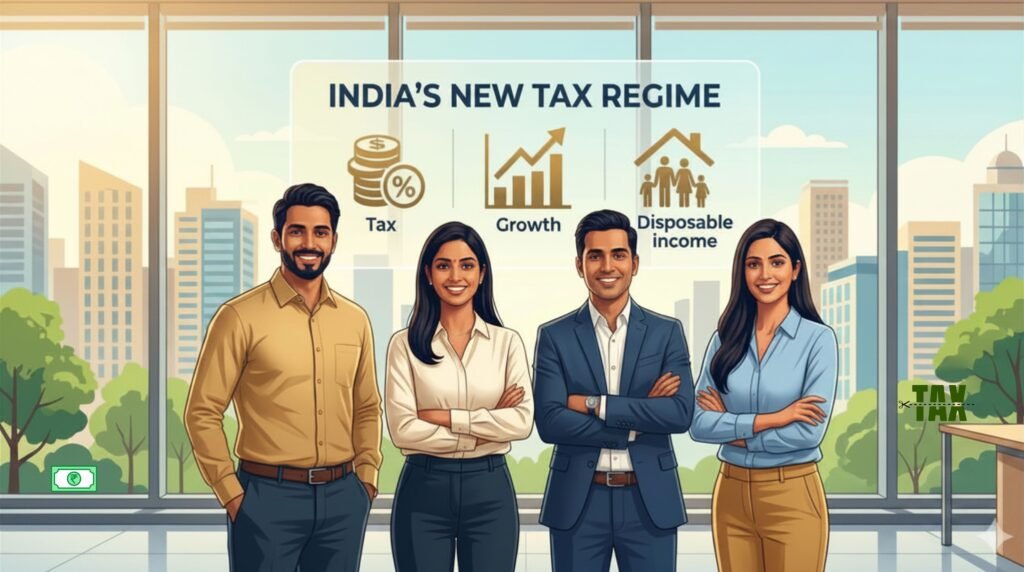
Managing personal finances in India can feel like scrambling a Rubik’s cube as the colors keep shifting—thanks to ever-changing regulations and the Finance Ministry’s jargon overload. It’s no wonder so many feel overwhelmed. But the Union Budget for FY 2025-26 delivers game-changing updates aimed squarely at the middle class, putting real money back in your pocket.

These reforms simplify tax filing, slash burdens, and supercharge disposable income. In short: more cash for spending, saving, or investing to fuel India’s economic engine.

This guide unpacks the key changes, demystifies the new slabs, and explains why the New Tax Regime is fast becoming every savvy taxpayer’s default choice.

What’s New? Breaking Down the Income Tax Slabs for AY 2025-26

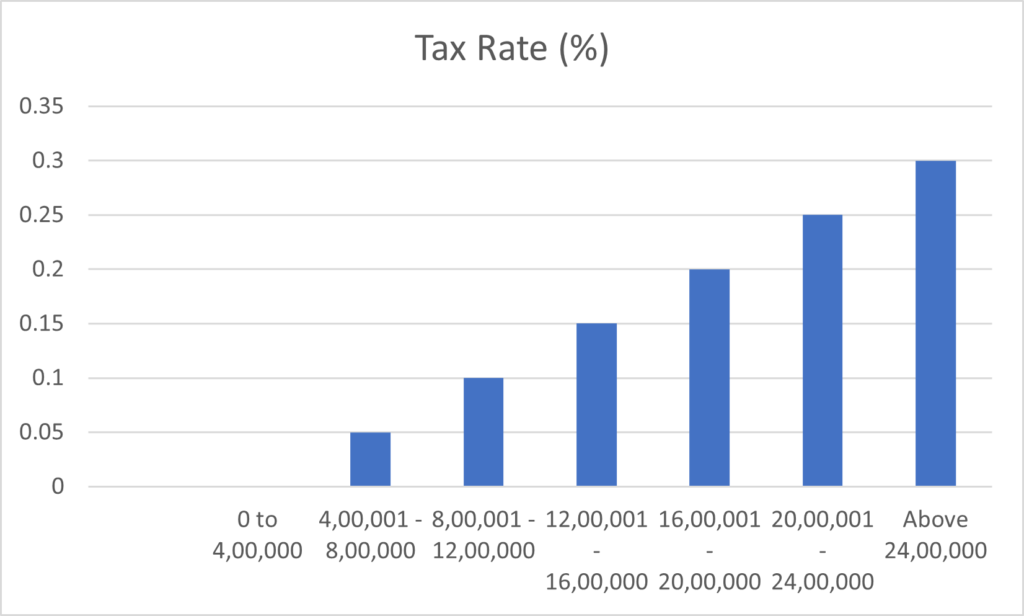
The following graphs show the latest income tax slab rates.
New Income Tax Slabs in India for FY 2025-26

The most talked-about update this year is the widening of the tax brackets. Under the New Tax Regime, the government has restructured the slabs to ensure that the transition from one tax rate to the next is more gradual. This prevents the “sticker shock” of jumping into a much higher tax bracket just because you received a modest year-end bonus.

The Updated Income Tax Slab Structure

For the Assessment Year (AY) 2026-27 (which covers income earned in FY 2025-26), here is the breakdown of how your hard-earned money will be taxed:

Annual Income Range (₹)Revised Tax Rate
Up to ₹4,00,0000% (Nil)
₹4,00,001 – ₹8,00,0005%
₹8,00,001 – ₹12,00,00010%
₹12,00,001 – ₹16,00,00015%
₹16,00,001 – ₹20,00,00020%
₹20,00,001 – ₹24,00,00025%
Above ₹24,00,00030%

Pro Tip: Keep in mind that these rates apply specifically to the New Tax Regime. While the Old Tax Regime still exists, the government is heavily incentivizing the New Regime by making it the default option and offering higher exemption limits.

For more information about income tax slabs, please visit https://www.incometax.gov.in/iec/foportal/help/individual/return-applicable-1.

Understanding How Income Tax Slabs Actually Work

tax slabs

If you are new to the workforce, the term “tax slab” might sound a bit technical. Essentially, India uses a progressive tax system. This means you don’t pay one flat rate on your entire income. Instead, your income is divided into “buckets” or slabs, and you pay the corresponding rate for each bucket.

A Real-World Example

Let’s say you earn ₹10,00,000 annually. Here is how the math works under the new rules:

  1. The First ₹4 Lakh: You pay ₹0.

  2. The Next ₹4 Lakh (₹4L to ₹8L): You pay 5% of that portion, which is ₹20,000.

  3. The Remaining ₹2 Lakh (₹8L to ₹10L): You pay 10% of that portion, which is ₹20,000.

Total Tax: ₹40,000 (before any cess or deductions).

By using this tiered approach, the system ensures that those in lower-income brackets are protected, while those with higher earning capacities contribute a larger proportionate share to nation-building.

Key Highlights of the 2025-26 Tax Reforms

The latest budget isn’t just about changing numbers; it’s about a shift in fiscal philosophy. Here are the major takeaways you need to know:

1. The Massive Leap in Tax-Free Income

One of the most exciting updates is the effective tax-free limit. Thanks to the combination of revised slabs and tax rebates, individuals earning up to ₹12 lakh per year may find themselves paying zero tax under the New Tax Regime. This is a massive jump from the previous ₹7 lakh limit. For a mid-level professional, this change can result in savings of thousands of rupees annually.

2. Standard Deduction: The Salaried Person’s Best Friend

The government has maintained the Standard Deduction of ₹75,000 for salaried employees and pensioners. This is a “flat” discount on your taxable income. If you earn ₹12,75,000, you immediately subtract ₹75,000, bringing your taxable income down to ₹12,00,000—which, as mentioned above, could put you in a very favorable tax position.

3. Simplification Over Complication

The Old Tax Regime required you to track rent receipts (HRA), insurance premiums (80C), and medical bills (80D) to save money. The New Tax Regime does away with most of these “hoops.” While you lose most deductions, the lower tax rates usually compensate for it. It’s designed for the modern worker who prefers liquidity and simplicity over complex tax-saving investments.

4. Increased Purchasing Power

By lowering the tax outgo for the middle class, the government is betting on increased domestic consumption. When you save ₹30,000 on your taxes, you are more likely to buy a new laptop, invest in a mutual fund, or take a family vacation. This creates a “multiplier effect” that helps businesses grow and creates more jobs.

Should You Choose the New or Old Tax Regime?

This is the golden question. While the New Tax Regime is now the default, you still have the option to switch to the Old Regime if it benefits you.

  • Choose the New Regime if: You don’t have many investments (like LIC, PPF, or a high home loan interest) and you want a simple, paperwork-free filing experience with lower immediate tax rates.

  • Choose the Old Regime if: You are heavily invested in tax-saving instruments, pay a high amount in house rent, or have a significant home loan. In these cases, the deductions might lower your taxable income enough to beat the New Regime’s rates.

The Big Picture: Why These Changes Matter

The 2025-26 tax updates signal a move toward a more transparent and “frictionless” tax environment. By reducing the compliance burden on the average citizen, the Income Tax Department is moving away from being a “collector” to being a “facilitator.”

For the economy, these changes are a breath of fresh air. They address the rising cost of living by ensuring that inflation doesn’t eat away at your take-home pay. When the middle class feels financially secure, the entire nation’s economic health improves.

Conclusion: Getting Ready for Tax Season

The latest changes in the income tax slab reduce the tax burden and improve the country’s economy.  

The revisions to the income tax slabs for FY 2025-26 are a clear win for the Indian taxpayer. With a higher exemption threshold, a continued standard deduction, and a more streamlined slab structure, the “tax season stress” is set to decrease significantly.

Your Next Steps:

  • Calculate your projected income for the year.

  • Use an online tax calculator to compare your liability under both regimes.

  • Adjust your voluntary contributions (like VPF or NPS) based on which regime you choose.

Taxation doesn’t have to be a headache. By staying informed and understanding these new slabs, you can make smarter financial decisions that serve your future self.

If you want support to file your income tax return, you can contact us at https://allsums.com/contact/ or book a service from https://allsums.com/services/

Scroll to Top